
Funny Mexican Nicknames for Men 😂 With Meanings
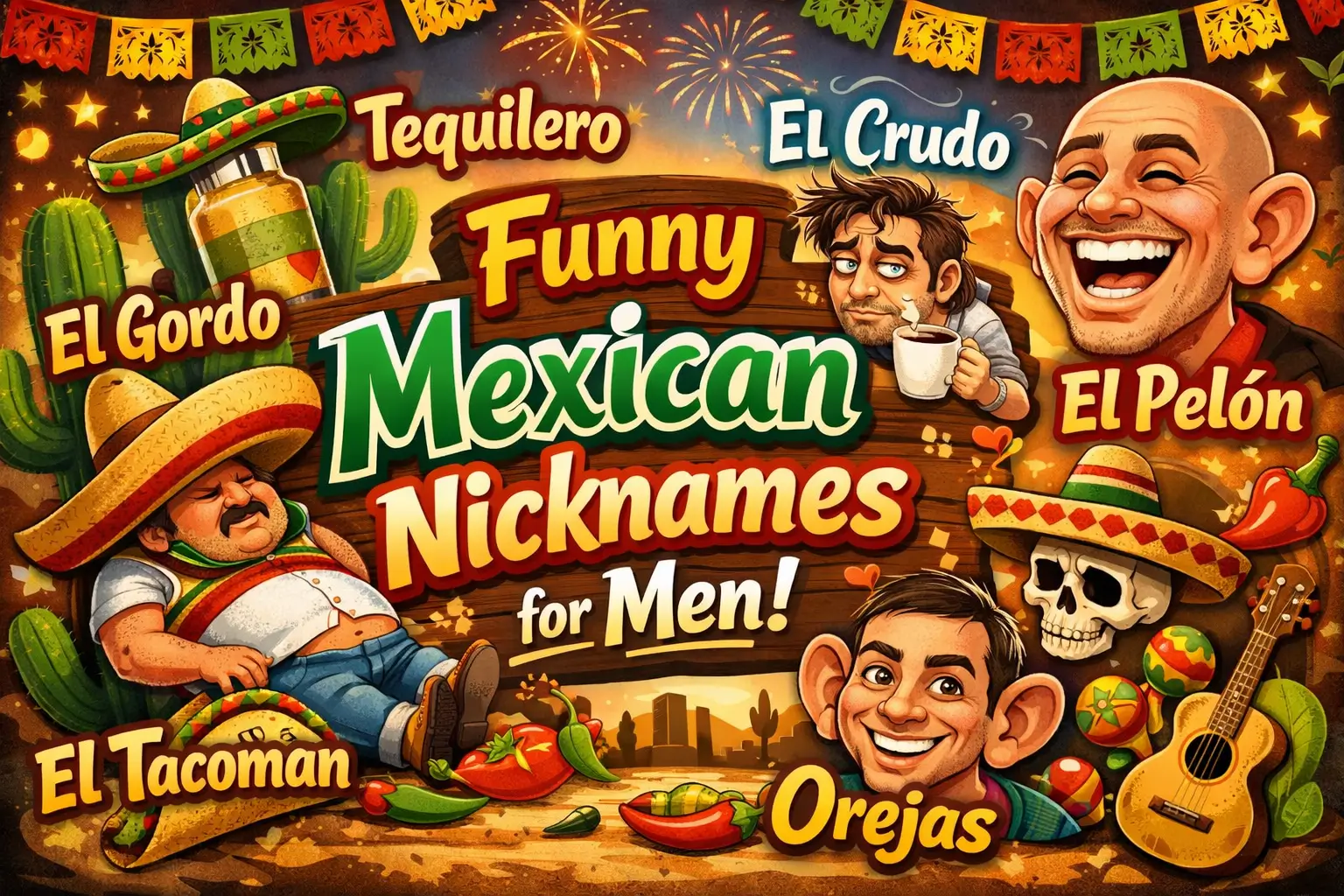
Mexican culture is full of humor, teasing, and playful language, so nicknames are basically a daily sport. Nobody escapes it. If you eat too much, you get a name. If you’re short, tall, loud, or even just existing in peace, you still get a name.
The funny part? The more serious the nickname sounds, the more normal it is in real life. Friends don’t use full names, they use jokes that stick forever.
Now let’s break down the most common funny Mexican male nicknames with meanings and real context.
Funny Mexican Nicknames for Men
1. Physical & Descriptive
- Gordo – Chubby guy (affectionate teasing)
- Flaco – Skinny guy
- Chaparro – Short guy
- Pelón – Bald guy
- Moreno – Dark-skinned guy
- Rubio – Blonde guy
- Narizón – Big-nosed guy
- Orejón – Big-eared guy
- Barbas – Bearded guy
- Grande – Big or tall guy
These nicknames come straight from appearance. No creativity needed—Mexicans observe one detail and it becomes your identity forever. The twist is that even if someone loses weight, they might still be “Gordo” for life. It’s not about accuracy—it’s about history and humor sticking together.
2. Shortened & Familiar
- Juani – From Juan
- Pedrito – Little Pedro
- Carlitos – Little Carlos
- Lalo – From Eduardo
- Chuy – From Jesús
- Pancho – From Francisco
- Memo – From Guillermo
- Beto – From Alberto
- Toño – From Antonio
- Chema – From José María
These are not insults—they’re verbal shortcuts. Instead of calling someone by their full name like a formal document, people compress it until it sounds friendly and casual. It often starts in childhood and never disappears, even when the person becomes a grown man with responsibilities.
3. Slang & Everyday Friendly Terms
- Güey – Dude / bro
- Vato – Guy / dude
- Carnal – Close brother-like friend
- Compadre – Trusted buddy
- Jefe – Boss / leader
- Morro – Young guy
- Chido – Cool guy
- Bro – Friend / brother
- Mi hermano – My brother
- Amigo loco – Crazy friend
This category is pure social glue. These words are used in every conversation, from greetings to arguments. “Güey” alone can express anger, laughter, surprise, or friendship depending on tone. If you misunderstand it, you’re missing half the communication system.
4. Funny Personality-Based
- Payaso – Clown
- Tragón – Big eater
- Dormilón – Sleepyhead
- Flojo – Lazy guy
- Bromista – Joker / prankster
- Dramático – Overdramatic person
- Lento – Slow guy
- Tonto – Silly guy
- Hablador – Talkative guy
- Rebelde – Rebel
These names are earned through behavior, not appearance. Eat too much? You’re “Tragón.” Overreact to everything? “Dramático.” Take too long to respond? “Lento.” The funny part is that people accept these labels like permanent software updates, they don’t uninstall them.
5. Irony & Opposite Meaning Nicknames 😏
- Gigante – For a short guy
- Einstein – For someone who acts silly
- Flash – For a slow person
- Hulk – For a calm or skinny guy
- Ángel – For a mischievous guy
- Santo – For a troublemaker
- Rey – For someone who fails often
- Joya – For a clumsy person
- Genio – For someone who makes dumb mistakes
- León – For someone not very brave
These are sarcastic nicknames. The humor comes from saying the opposite of reality. In Mexican friend groups, irony is one of the strongest forms of teasing.
6. Work & Role-Based Nicknames
- El Patrón – The boss
- El Profe – The teacher-type guy
- El Doctor – Smart or serious guy
- El Ingeniero – Tech or engineering guy
- El Mecánico – Always fixing things
- El Chef – Good cook in the group
- El Guardia – Protective friend
- El Líder – Natural leader
- El Mensajero – Always running errands
- El Estratega – Always planning everything
These come from roles people play in life, school, or friend groups. Even if the person doesn’t officially do that job, friends still assign the nickname based on behavior.
FAQs
Are Mexican nicknames meant to insult?
No. In most cases, they are jokes shared among friends. The meaning depends entirely on tone and closeness.
Can these nicknames be used in real conversations?
Yes, but only in informal relationships. Using them with strangers without context can backfire.
Why do Mexicans use so many nicknames?
Because humor is part of everyday communication, and nicknames make interactions faster, funnier, and more personal.
Do these nicknames ever change?
Rarely. Once a nickname sticks, it usually follows a person for life, even if the original reason disappears.