Sequel Definition and Meaning Explained
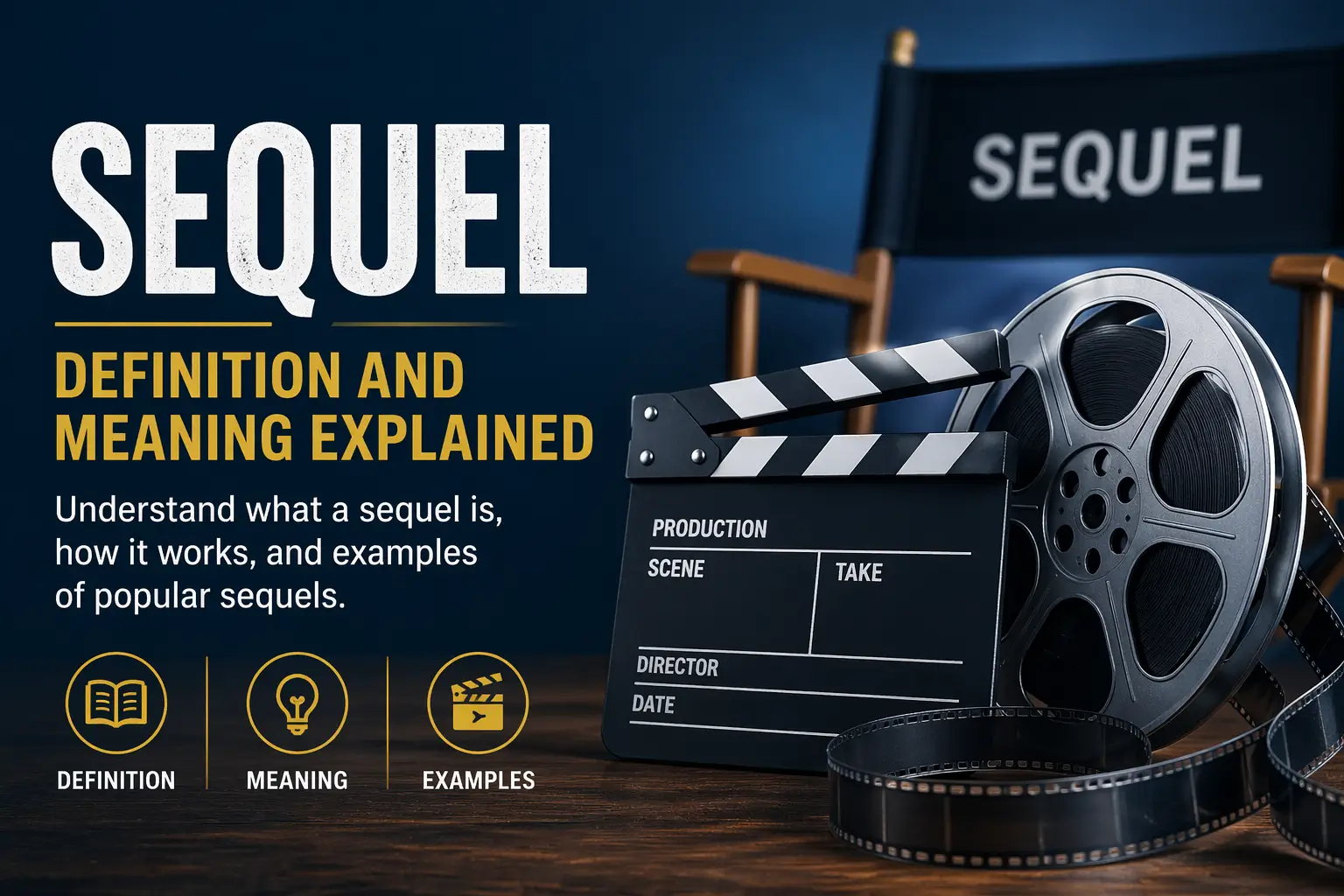
A “sequel” is something that comes after an original work, continuing its story, ideas, or development, most commonly used for movies, books, and games, but also used in fields like medicine to describe a condition that follows another. For example: “That movie got a sequel after its success.”
What Is a Sequel?
A sequel is a continuation of an earlier work. It builds on the original by extending the story, bringing back characters, or exploring what happens next.
Sequels are very common in entertainment, where successful content often leads to follow-up parts.
Origin of the Word “Sequel”
The word “sequel” comes from the Latin word “sequi,” which means “to follow.” Over time, it became part of English to describe anything that follows or continues something else.
This origin explains why the term is used in both creative and technical contexts.
Sequel in Movies
In movies, a sequel is a film that continues the story of a previous movie. It may follow the same characters, storyline, or world.
Examples include:
- A second part of a blockbuster film
- Continuing a hero’s journey
- Expanding a fictional universe
Sequels in movies are often made when the original film is successful.
Sequel in Books
In books, a sequel continues the narrative of a previous novel or story. It may pick up from where the first book ended or explore new developments in the same world.
Examples:
- Series novels
- Fantasy or adventure sagas
- Story continuations with the same characters
Readers often enjoy sequels because they extend stories they already love.
Sequel in Games
In gaming, a sequel is a new game that follows an earlier version. It may include improved graphics, new features, or expanded storylines.
Examples:
- Part 2 of a popular game
- New levels or characters
- Enhanced gameplay mechanics
Game sequels often build on the success of earlier releases.
Sequel in Medical Terms
In medicine, the word “sequel” (often used as “sequela”) refers to a condition that occurs as a result of a previous illness or injury.
Examples:
- Long-term effects after a disease
- Complications following an injury
- Health conditions that develop later
This usage is more technical and less commonly known by general audiences.
Types of Sequels
Sequels can appear in different forms depending on how they continue the original:
- Direct sequel: Continues the story immediately
- Indirect sequel: Same world, different timeline or characters
- Spiritual sequel: Similar themes but not directly connected
- Prequel: Story that happens before the original
Each type offers a different way of expanding a story.
Why Sequels Are Popular
Sequels are popular because they:
- Continue stories people already enjoy
- Build emotional connection with characters
- Expand fictional worlds
- Attract existing audiences
- Offer new twists and developments
They provide both familiarity and new experiences.
Sequel vs Prequel vs Remake
These terms are often confused but have different meanings:
| Term | Meaning | Example Use |
|---|---|---|
| Sequel | Continues the story | Part 2 of a movie |
| Prequel | Happens before the original | Backstory of characters |
| Remake | Recreates the same story | New version of old film |
Understanding these differences helps avoid confusion.
Characteristics of a Good Sequel
A strong sequel usually includes:
- Continuation of the storyline
- Character development
- New challenges or conflicts
- Improved quality or depth
- Fresh ideas while staying connected
A good sequel balances familiarity with innovation.
Common Mistakes About Sequels
Some misunderstandings include:
- Thinking all sequels are direct continuations
- Confusing sequels with remakes
- Assuming sequels are always better or worse
- Not recognizing sequels in non-entertainment fields
Understanding context helps clarify meaning.
Sequel in Everyday Language
Outside entertainment and medicine, “sequel” can be used more generally to describe anything that follows something else.
Examples:
- Events that happen after a situation
- Consequences of actions
- Follow-up developments
It is a flexible term with broad usage.
FAQ’s
1. What does sequel mean?
A sequel is something that follows and continues an original work or event.
2. Is a sequel always part 2?
Not always. It can be part 2, 3, or any continuation.
3. What is the difference between sequel and prequel?
A sequel continues the story, while a prequel shows what happened before.
4. Can a sequel be in real life?
Yes, in general language or medicine, it can refer to something that follows an event.
5. Are sequels always successful?
Not always. Some sequels succeed, while others may not meet expectations.